
Dongguan Haikun New Material Co., Ltd.

Dongguan Haikun New Material Co., Ltd.

How do zirconia crystals change?

2022 07/20

Zirconia is a polycrystalline material that exists in three forms: monoclinic (m), tetragonal (t), and cubic (c), which can be converted into each other under certain temperature conditions. When the sintered zirconia is cooled to room temperature, due to the transformation of the crystal structure Zirconia Ceramic Rods (from the tetragonal phase to the monoclinic phase), and the unit cell volume of the monoclinic crystal is about 4% larger than that of the tetragonal crystal, cracks will occur inside the zirconia. Reduce the mechanical strength of zirconia. Adding stable oxides such as CaO, MgO, CeO2, Y2O3 can stabilize this process. Zirconia ceramics with yttria added have a unique stress-induced transformation and toughening effect, which makes them have excellent mechanical properties. The bending strength can reach 900 ~ 1200Mpa.

Another method to stabilize tetragonal zirconia at room temperature Zirconia Ceramic Tube is to reduce the grain size (average critical grain size < 0.3 μm).
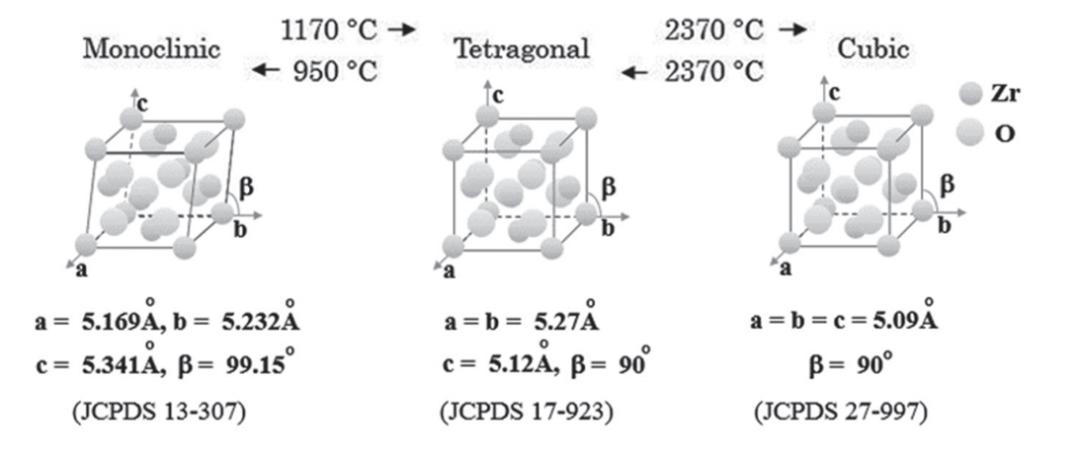

In practical applications, in order to obtain the required crystal form and performance, different types of stabilizers are usually added to make different types of zirconia ceramics. Zirconia ceramics can be divided into three types according to their microstructure: fully stabilized zirconia ( FSZ), partially stabilized zirconia (PSZ), tetragonal zirconia polycrystalline (TZP). For example, when the stabilizer is CaO, MgO, Y2O3, it is expressed as Ca-PSZ, Mg-PSZ, Y-PSZ (Partially Stabilized Zirconia), etc. respectively. The zirconia used in dental materials is Yttria-stabilized Tetragonal zirconia polycrystal (Y-TZP)
Zirconia ceramic materials have good Zirconia Ceramic Ring aesthetic properties, good biocompatibility and excellent toughness, strength and fatigue resistance, in addition to excellent wear resistance.
Most research reports indicate that the main disadvantage of zirconia is the wear of the coating material during the cementation process, which affects the strength of the ceramic and the tightness of the interfacial bond. The chemical inertness of zirconia also affects the bonding effect and thus the function of the restoration. Full-contour zirconia restorations have the disadvantage of being opaque and subject to low temperature degradation in vivo.