

How do ceramic pieces adapt to different working environments?
1. Choose the right material.
2. Reasonably designed structure: According to the requirements of the working environment, a reasonable structure is designed so that the alumina ceramic standard parts can withstand corresponding pressure and force and increase its thermal stability.
3. Surface treatment: Surface treatment and coating treatment are performed on standard parts to increase surface hardness and internal wear resistance.
4. Strict quality control: By controlling parameters such as sintering temperature and time, the reliability and strength of product quality are improved.
It adapts to different working environments by selecting appropriate materials, well-designed structures, surface treatments and strict quality control to ensure its reliability and stability under various harsh conditions.
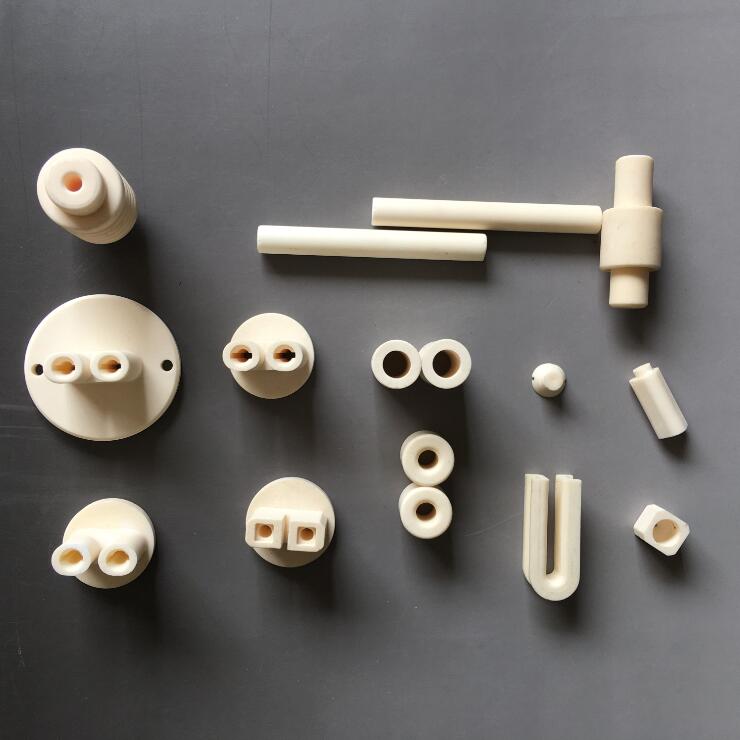
Common industries where ceramic parts can be used:
1. Alumina ceramic plates can be used in electronic components in electronics, communications and other industries.
2. Alumina ceramic shafts can be used for bearing support in high-speed rotating equipment and high-temperature and high-pressure environments in machinery, aerospace, chemical and other industries.
3. Alumina ceramic tubes can be used in corrosion-resistant pipes, heat transfer equipment, electrical insulation, etc. in chemical, electric power and other industries.
4. Alumina ceramic tiles are used in circuit substrates, artificial joints, etc. in the medical, electronic, chemical and other industries.
Alumina ceramic standard parts have a wide range of applications, but are not limited to this. They can meet the special requirements of various industries and machines for high temperature, high pressure, corrosion resistance and other special requirements. The specific application also depends on the material properties and customer needs.