

Premium industrial ceramic materials are widely adopted in precision machinery, electronic insulation, chemical processing and new energy fields, where operational stability and long-term reliability are core evaluation indicators. Unlike ordinary structural materials, high-grade ceramic products require strict standardized testing systems to verify hardness, thermal stability, corrosion resistance and structural consistency. A complete set of industrial testing specifications not only unifies product quality judgment criteria but also helps manufacturers deliver stable and qualified components for high-standard industrial scenarios.
As a mainstream high-performance structural and insulating material, Alumina Ceramics must comply with unified industrial reliability standards before mass delivery. International mainstream specifications cover dimensional tolerance testing, density detection, porosity rate inspection and high-temperature stability evaluation. These standardized tests eliminate performance differences caused by raw material ratios and sintering processes, ensuring that finished materials maintain stable physical and chemical properties under continuous industrial operation. Standardized detection also supports product certification such as ISO9001 and RoHS, laying a foundation for global industrial matching and market circulation.
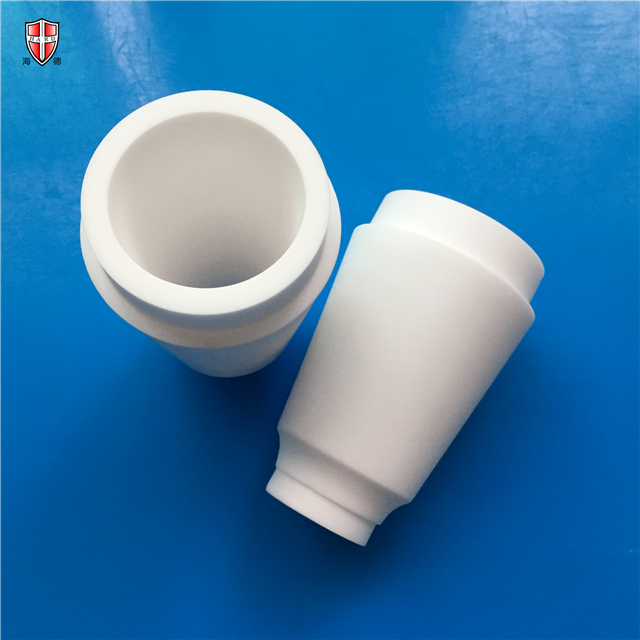
In actual industrial applications, most equipment failures related to ceramic components stem from unqualified precision and unstable assembly performance. Therefore, targeted testing for finished components is particularly critical. Alumina Ceramics Parts need to undergo professional tests including surface roughness detection, compression resistance testing, thermal shock cycling testing and insulation performance testing. For precision electronic and mechanical equipment, even tiny dimensional errors or internal microcracks will lead to equipment jitter, electric leakage or shortened service life. Strict implementation of industrial testing specifications effectively avoids hidden dangers caused by unqualified parts and improves the overall operation safety of industrial equipment.
Harsh working environments such as high friction, strong corrosion and high temperature put forward higher requirements for material durability. Traditional ordinary ceramics are prone to wear, peeling and structural failure in long-term abrasive working conditions, while optimized industrial materials show outstanding environmental adaptability. Wear Resistant Alumina Ceramic undergoes professional anti-abrasion testing, acid and alkali corrosion resistance detection and continuous friction fatigue testing according to industrial standards. These professional testing items verify its adaptability in harsh environments and ensure that the material can maintain complete structural stability and stable performance during long-cycle industrial operation.
Current industrial reliability standards for premium ceramic materials are constantly updated with the upgrading of manufacturing industry. Modern testing specifications no longer focus only on single physical indicators, but carry out comprehensive evaluation combining mechanical performance, environmental adaptability and service life. Standardized testing processes run through raw material screening, sintering production, finished product inspection and factory sampling, forming a closed-loop quality control system. This systematic testing mode greatly improves the consistency and reliability of finished products.