

Alumina ceramic sheets can be divided into three types: fibrous alumina ceramic sheets, fine alumina ceramic sheets, and wear-resistant alumina ceramic sheets. What are the differences between these and ordinary ceramics? Below is a detailed explanation from the zirconium oxide ceramics editor.
**Characteristics of Fiber Alumina Ceramic Sheets:** High tensile strength, with a Rockwell hardness of HRA80-90; excellent wear resistance, exceeding that of alloy steel and high-chromium cast iron; and a service life more than 10 times longer than other materials. Furthermore, fibrous alumina ceramic sheets are very lightweight, with a relative density of 3.65 g/cm³, significantly reducing the load on industrial equipment.
**Fine Alumina Ceramic Sheets:** Compared to ordinary aluminosilicate boards, fine alumina ceramics differ greatly in composition and processing technology. Ordinary ceramic sheets are made through three production processes: raw material preparation, blank forming, and kiln firing. Fine alumina ceramic sheets, on the other hand, are mostly produced using a powder-firing process.
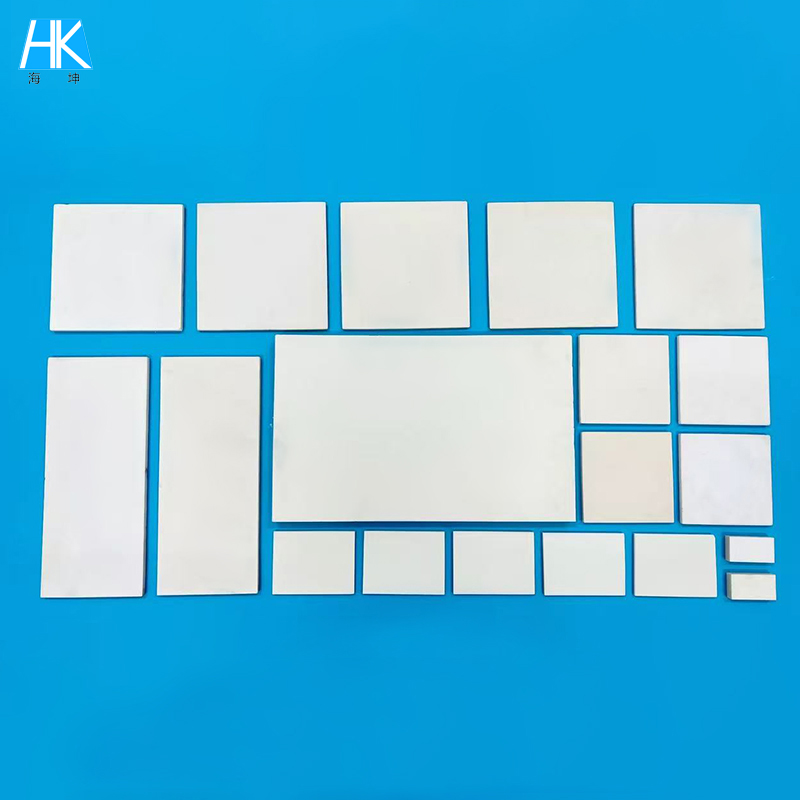
What are the main components of alumina ceramics, and how are alumina ceramic sheets fired?
Compared to other two types, wear-resistant ceramic sheets better meet customers' urgent needs, providing excellent solutions and construction services for the wear and corrosion of company equipment.
Wear-resistant ceramic sheets, through a composite system and unique treatment, achieve chemical fusion, resulting in high strength. The high-temperature composite material with excellent ductility and impact resistance uses non-oriented corundum fiber reinforcement, further enhancing ductility through coupling, thus exhibiting strong impact toughness and effectively preventing damage and detachment caused by impact forces.
Wear-resistant ceramic sheets are a special corundum ceramic made from AL2O3 as the main raw material and non-ferrous metal oxides as the solution, fired at a high temperature of 1000 degrees Celsius. Its Rockwell hardness is HRA80-90, second only to diamond, far exceeding the wear resistance of wear-resistant steel and stainless steel. At 5G/cm3, it is only half that of stainless steel, significantly reducing the load on equipment. Wear-resistant ceramic sheets are bonded to the inner cavity of the equipment using high-temperature resistant strong adhesive.