

Modern aerospace and satellite missions pose unprecedented challenges for industrial materials, requiring exceptional stability under extreme working conditions including intense cosmic radiation, drastic temperature fluctuations, high vacuum, and strong chemical corrosion. Traditional metal and ordinary glass components often suffer from deformation, performance attenuation, or structural damage in orbital environments, which affects satellite optical precision, data transmission stability, and long-term operational safety. To solve these industry pain points, high-performance customized precision ceramic and glass parts have become indispensable core materials for advanced aerospace equipment manufacturing.
The unique physical and chemical properties of Quartz Glass make it stand out among aerospace-grade special materials. Featuring an ultra-low thermal expansion coefficient, excellent radiation resistance, and full-spectrum optical transmittance, it can maintain stable dimensional accuracy and optical performance under extreme temperature changes ranging from ultra-low cold to high-temperature radiation. Unlike conventional materials that are prone to thermal fatigue and structural cracking, it adapts to long-duration orbital operation and repeated orbital thermal cycling, effectively supporting the stable work of satellite optical sensing and positioning systems.
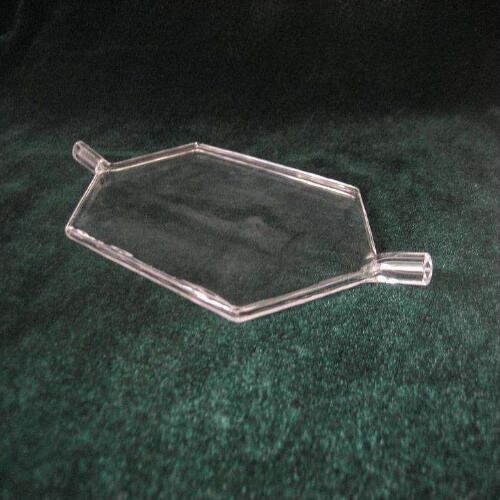
With the rapid iteration of aerospace technology, standardized structural parts can no longer meet the personalized needs of different satellite models and aviation equipment. Custom processing technology has greatly improved the environmental adaptability of aerospace core components. Professional manufacturers adopt precision CNC cutting, ultra-precision polishing and high-purity sintering processes to tailor component shapes, sizes and surface accuracy according to mission requirements. This customized production mode perfectly matches the complex installation structure and extreme working environment of aerospace equipment, filling the performance gap of general industrial materials.
In high-precision aerospace optical detection and signal transmission systems, Optical Fiber Quartz Glass Rod plays a vital supporting role. It boasts ultra-high light transmittance in ultraviolet, visible and infrared bands, with extremely low optical loss and stable light transmission performance in cosmic radiation environments. It effectively ensures accurate signal transmission and high-definition imaging of satellite remote sensing, aerospace detection and laser communication equipment, avoiding signal distortion and data errors caused by material performance degradation in extreme space conditions.
Aerospace experimental detection and ground simulation test systems also put forward ultra-high requirements for material stability and precision. Quartz Glass Slid is widely used in aerospace calibration equipment, optical testing platforms and extreme environment simulation devices. Its flat and smooth surface, stable chemical inertness and excellent pressure resistance ensure high-precision calibration and long-term stable operation of testing equipment. It can resist trace chemical erosion and tiny particle abrasion in simulation environments, maintaining consistent detection accuracy for aerospace product research and development verification.
As global commercial aerospace and low-orbit satellite networking industries continue to expand, the demand for extreme environment-resistant high-precision customized components keeps rising steadily. Custom quartz glass series products have become the preferred materials for aerospace and satellite fields due to their outstanding thermal stability, radiation resistance and optical performance. Continuous upgrading of customized processing technology will further optimize product precision and environmental adaptability, providing more reliable material guarantees for future deep space exploration and high-precision satellite operation.