

With the rapid development of new energy vehicles, industrial power control and AI computing equipment, high-power semiconductor modules continue to upgrade towards high power density and miniaturization. This technological trend leads to concentrated heat generation inside compact module structures, making thermal dissipation and electrical insulation core challenges for modern semiconductor manufacturing. Traditional insulating and heat-conducting materials struggle to balance high-temperature stability, insulation performance and heat transfer efficiency, easily causing overheating failure and shortened service life of power modules. Advanced ceramic thermal management solutions have become the key to breaking this industry bottleneck.
Aluminum Nitride Ceramic has emerged as a mainstream thermal management material for high-end semiconductor modules, thanks to its excellent comprehensive performance. It features ultra-high thermal conductivity, low dielectric loss and extremely low thermal expansion coefficient, far surpassing alumina ceramics and other conventional insulating materials. In high-power module operating environments with long-term high-load operation and frequent temperature changes, this premium ceramic material can quickly export accumulated heat, effectively eliminate internal hot spots, and maintain stable electrical insulation performance, laying a solid foundation for the reliable operation of semiconductor devices.
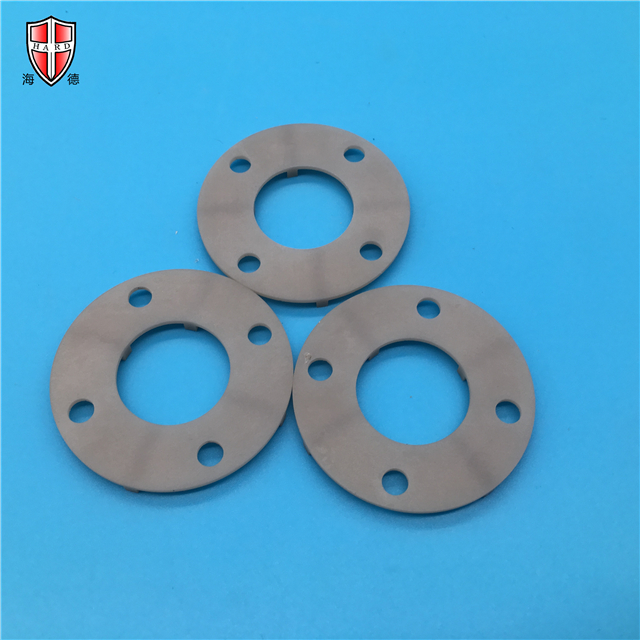
The stable operation of semiconductor modules relies not only on core thermal conductive materials, but also on precision matching structural accessories. Custom porous insulating bases and annular sealing gaskets are essential auxiliary components inside power modules. These precision structural parts are designed for precise positioning, isolation and heat conduction, adapting to the compact internal layout of high-power modules. They perfectly fit the assembly gaps of chips and circuit structures, ensuring uniform heat transfer while avoiding electrical leakage and short-circuit risks.
Aluminum Nitride Plate is widely processed into customized insulating gaskets and multi-hole base components for semiconductor thermal management systems. Through ultra-precision cutting, drilling and surface polishing processes, flat and high-precision ceramic plates are made into various special-shaped structural parts. These finished components maintain consistent thermal conductivity and dimensional stability under extreme working conditions, solving the problem of uneven heat dissipation caused by irregular assembly of traditional accessories, and greatly improving the overall thermal management efficiency of power modules.
In high-voltage and high-power semiconductor application scenarios, material durability and structural stability are crucial. Different from fragile ordinary ceramic parts, customized ceramic accessories processed from high-performance raw materials resist thermal shock, high-pressure impact and chemical corrosion. They will not deform or crack during long-cycle operation, effectively reducing equipment maintenance frequency and replacement costs for industrial manufacturers.
Aluminum Nitride Shaft and its derived precision structural accessories further enrich the thermal management system of high-power semiconductor modules. While undertaking heat conduction and insulation tasks, these customized ceramic structural parts adapt to diversified module assembly structures, meeting the personalized design needs of high-power, high-frequency and miniaturized semiconductor equipment. As the power density of electronic devices continues to increase, high-performance ceramic thermal dissipation solutions will become more indispensable in the global semiconductor industry, driving the continuous upgrading of high-power module thermal management technology.