

Zirconia ceramic grinding typically utilizes micron-sized abrasive grains, harder than ceramic materials, to remove minute amounts of material from the machined surface through the micro-cutting and rolling action of a hard grinding disc. This achieves the required shape and dimensional accuracy of the workpiece, reduces surface roughness, and removes altered layers.
1. Grinding Mechanism
The material is a hard, brittle, and difficult-to-machine material. In the grinding process of such materials, the removal of the machined material depends on the rolling or micro-cutting action of the abrasive grains.
When grinding hard and brittle materials, controlling the size and uniformity of cracks is crucial. On the other hand, to avoid large surface damage during zirconia ceramic machining, and to improve machining efficiency, it is necessary to promote micro-fragmentation. Selecting the appropriate abrasive grain size and controlling its uniformity can prevent the occurrence of particularly large machining defects.
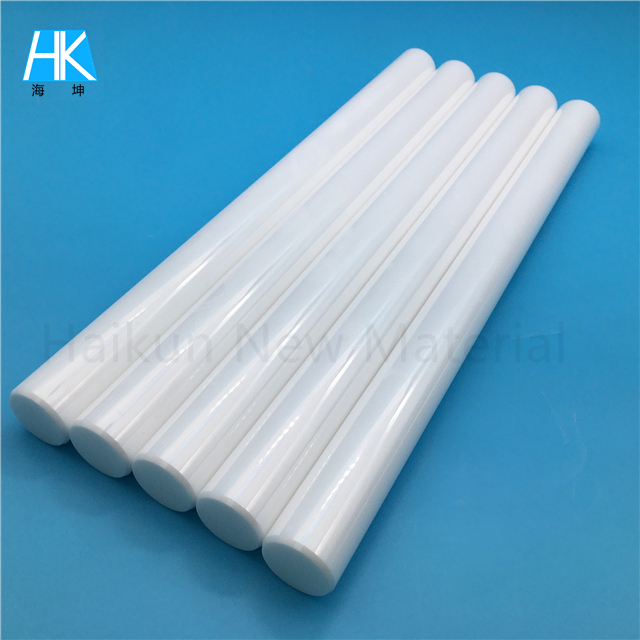
What is the grinding process flow? What is the grinding process flow for zirconia ceramics?
2. Characteristics of Grinding Process
(1) Micro-cutting: Due to the distribution of multiple abrasive grains between the workpiece and the grinding tool, each grain experiences a small load. By controlling an appropriate machining load range, a smaller backlash than l<sub>anm</sub> can be achieved, realizing micro-cutting of the workpiece material.
(2) Forming according to the principle of evolution: When the grinding tool contacts the workpiece, it can automatically select the convex parts to be processed through non-forced grinding pressure. Therefore, only the material of the convex parts of both is removed, allowing the grinding tool and workpiece to mutually adjust each other and gradually improve accuracy. The machining accuracy of ultra-precision grinding is almost unrelated to the motion accuracy of the machine tool that constitutes the relative motion. It is mainly determined by factors such as the contact characteristics and pressure characteristics between the workpiece and the grinding tool, and the shape of the relative motion trajectory. Under appropriate conditions, the machining accuracy can exceed the accuracy of the machine tool itself; therefore, this process is called evolutionary machining.
(3) Multi-edge multi-directional cutting: In grinding, the shape of each abrasive grain is not completely consistent. Based on the randomness of the distribution, the abrasive grains can perform multi-directional cutting while folding and rolling on the workpiece. Moreover, the overall cutting opportunities and cutting edge breakage rate of the abrasive grains are equal, allowing for automatic sharp simulation.
Processing efficiency can be improved by increasing the contact area, contact pressure, and relative movement distance between the workpiece and the abrasive grains, while reducing the half-apex angle of the abrasive grain cone. Surface roughness can be reduced by decreasing the abrasive grain size, the contact pressure between the workpiece and the abrasive grains, and the abrasive grain volume fraction, thereby increasing the yield point of zirconia ceramics, the half-apex angle of the abrasive grain cone, and the abrasive grain ratio.