

Laser cutting has become a cornerstone technology in ceramic processing, offering unmatched precision, speed, and versatility for manufacturing complex finished parts. However, the inherent brittleness of ceramic materials and high precision requirements of industrial applications make rigorous quality control (QC) non-negotiable. Without effective QC, even advanced laser cutting can produce defective parts—wasting materials, increasing costs, and compromising end-use performance. This article explores key QC methods for laser-cut ceramic finished parts, ensuring consistency, reliability, and compliance with industry standards.
The first QC step is pre-inspection of raw materials, as material quality directly impacts the final product. Laser Cutting Ceramics depends on consistent material properties for uniform cutting; variations in composition, density, or thickness cause uneven edges, cracks, or dimensional errors. Pre-inspection uses optical microscopes and density meters to verify ceramic purity, grain size, and surface condition, eliminating defective materials early to reduce rework and waste.
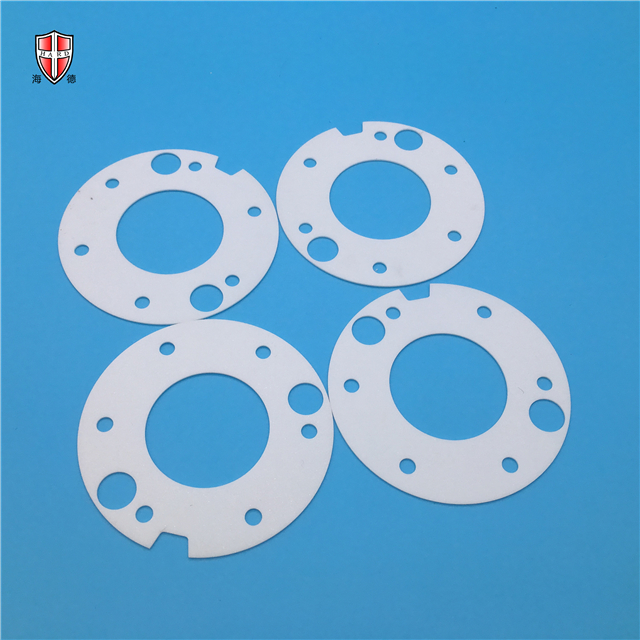
Dimensional accuracy is critical, especially in electronics and aerospace where parts must fit seamlessly. Post-cut inspection uses coordinate measuring machines (CMMs) and laser scanners to verify compliance with design specs, measuring dimensions to micrometer-level accuracy. For example, Alumina Ceramic Substrate Sheet production requires minimal dimensional deviation—even a few microns can harm thermal conductivity and electrical performance, making this QC step essential.
Surface quality inspection is another vital method. Laser cutting may leave burrs, chipping, or thermal damage, compromising functionality and durability. Inspectors use magnifying tools and surface roughness testers to evaluate surfaces. For critical applications like Machinable Ceramic Filter, a smooth, burr-free surface ensures unobstructed fluid flow and prevents clogging, making surface QC non-negotiable.
Mechanical property testing verifies structural integrity, especially for high-stress applications. Laser cutting can create residual stresses that cause cracking, so QC includes hardness, tensile strength, and impact resistance tests. These ensure parts withstand operational demands, critical for long-term reliability in harsh environments.
Thermal performance testing is key for high-temperature applications. Ceramics’ thermal stability can be altered by laser cutting, so QC includes thermal conductivity and shock resistance tests to confirm performance under extreme temperature changes, relevant for industrial furnaces and electronic devices.
Process control and documentation are often overlooked but essential. Monitoring and documenting laser parameters (power, speed, gas pressure) allows real-time adjustments, reducing defects and ensuring consistency. Detailed documentation enables traceability, critical for regulatory compliance and customer requirements.