

Thermal management has always been a core challenge in modern industrial manufacturing, especially for high-temperature machinery, semiconductor equipment, and new energy devices. Excessive heat accumulation and poor heat dissipation often lead to reduced equipment efficiency, accelerated component aging, and even safety failures. Traditional metal and ordinary ceramic materials can no longer meet the high-standard thermal control demands of precision industries. With outstanding thermal conduction performance and stable physical properties, advanced ceramic materials have become the preferred solution for industrial thermal management in recent years.
Possessing excellent thermal conductivity and low thermal expansion coefficient, Silicon Carbide Ceramic stands out among industrial structural ceramics. Unlike common materials that struggle with heat transfer balance, it maintains efficient and uniform heat dissipation under long-term high-temperature operation. Its unique crystal structure enables rapid internal heat conduction, avoiding local overheating and thermal stress concentration. Meanwhile, the material retains stable mechanical hardness and structural integrity at extreme temperatures, which makes it far more reliable than traditional heat-conducting materials in harsh industrial scenarios.
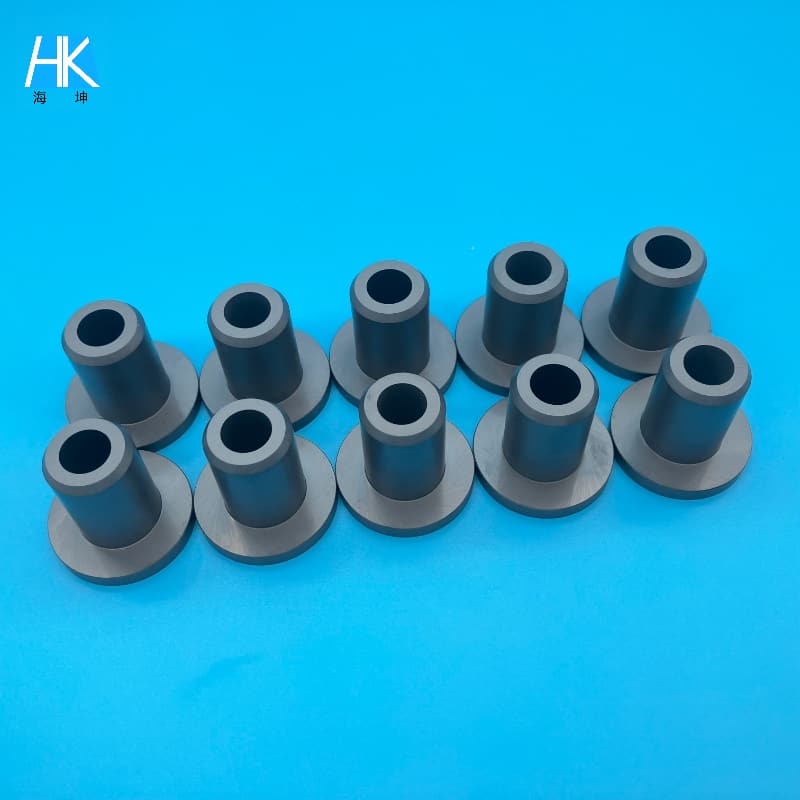
To better highlight the performance advantages of high thermal conductivity ceramics, industrial practitioners often conduct comparative tests with traditional ceramic materials. Al2O3 Ceramic, as a widely used conventional industrial ceramic, features good insulation performance but relatively low thermal conductivity. In high-power and high-temperature working environments, alumina ceramic components are prone to heat accumulation, resulting in decreased operational accuracy and shortened service life. In contrast, silicon carbide ceramic achieves a perfect balance of insulation, high temperature resistance and thermal conductivity, effectively solving the heat dissipation bottleneck that restricts the performance of traditional ceramic parts.
The superior thermal conductivity characteristics bring huge practical industrial value to advanced ceramic materials. Sic Ceramic components are widely applied in semiconductor heat sinks, industrial furnace structural parts, new energy battery thermal management components and high-speed mechanical accessories. Its efficient heat dissipation capacity stabilizes the operating temperature of precision equipment, greatly improving production efficiency and operational stability. In addition, its excellent thermal shock resistance avoids cracking or deformation caused by rapid temperature changes, reducing equipment failure rates and long-term maintenance costs for enterprises.
Beyond thermal performance, the comprehensive properties of silicon carbide ceramic further expand its industrial application value. It integrates high hardness, strong wear resistance, corrosion resistance and lightweight features, adapting to complex working conditions such as chemical corrosion, high-speed friction and ultra-high temperature environments. Compared with metal heat dissipation parts, it will not oxidize or deform after long-term use, ensuring long-term consistent thermal conduction efficiency. This stable comprehensive performance makes it an irreplaceable key material in high-end intelligent manufacturing, aerospace and new energy industries.
In summary, the unique thermal conductivity characteristics of silicon carbide ceramic fill the performance gap of traditional industrial materials. By combining efficient heat dissipation, high-temperature stability and excellent mechanical properties, it provides reliable thermal management solutions for modern precision industries. As industrial manufacturing continues to upgrade towards high precision and high efficiency, the application value and market demand of high-performance silicon carbide ceramic materials will continue to grow steadily.